|




Mertensia virginica
Mertensia virginica
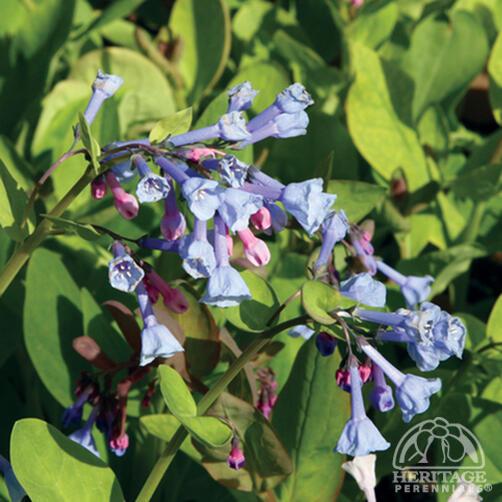
Plant number: 1.364.100(=M. pulmonarioides) Virginia Bluebells are native to most of Eastern North America where they grow in moist woodland areas. Plants produce upright mounds of grey-green leaves, bearing clusters of dangling pink buds that open into bright sapphire-blue bells. This will become dormant by midsummer, so use other plants to hide any gaps left behind. Hostas and ferns both work well as companions. Once clumps become established they will slowly spread into a small patch, and also reproduce by self seeding. Fairly easily divided in early fall. Tolerant of dry shade during the dormant period. Further details for |

| All 2 results here | Alphabetical list of all 4,000+ perennials here |


Mertensia virginica
Plant number: 1.364.100(=M. pulmonarioides) Virginia Bluebells are native to most of Eastern North America where they grow in moist woodland areas. Plants produce upright mounds of grey-green leaves, bearing clusters of dangling pink buds that open into bright sapphire-blue bells. This will become dormant by midsummer, so use other plants to hide any gaps left behind. Hostas and ferns both work well as companions. Once clumps become established they will slowly spread into a small patch, and also reproduce by self seeding. Fairly easily divided in early fall. Tolerant of dry shade during the dormant period. Further details for |